
Swastika: Unraveling the Slavic Swastika and Its Ancient Roots

Authored by classasan.com, 24 Dec 2025
Tracing the Shadows of the Swastika Symbol
Imagine coming across a symbol that appears in countless cultures across continents, yet carries vastly different meanings depending on where and when you find it. The swastika is one such enigmatic figure—an ancient emblem whose history has been tangled in misunderstandings, misappropriations, and rediscoveries. Among its many incarnations, the Slavic swastika holds a special place, bridging the past and present of Slavic heritage and spirituality. But how often do we pause to ask: what is the true swastika meaning in Slavic culture, and how does it relate to the broader swastika history that spans millennia?
For many outside scholarly circles, the word “swastika” instantly conjures a dark chapter of 20th-century history, overshadowing its thousands of years as a symbol of life, sun, power, and good fortune. This modern stigma has obscured the rich tapestry of the ancient swastika and its deep roots in Slavic mythology and art. The Slavic swastika, often overlooked or misrepresented, deserves a spotlight—not just as a historical curiosity, but as a vibrant emblem that reflects the worldview and spiritual resilience of Slavic peoples throughout time.
Why Does the Swastika Symbol Matter in the Slavic Context?
Here's the twist: the swastika symbol is not a monolith. Its form varies—sometimes clockwise, sometimes counterclockwise—and its meaning shifts subtly across cultures. Yet, within Slavic traditions, this symbol was more than decoration; it was a cosmic signifier. It appeared on pottery, textiles, and ritual objects, often linked to deities associated with the sun, fertility, and protection. The ancient swastika was a visual shorthand for eternal cycles, growth, and harmony with nature.
Despite this, the depth of the swastika meaning in Slavic culture remains underexplored by many. This gap in understanding has led to a kind of cultural amnesia, where the symbol's positive essence is eclipsed by external narratives. That’s not just a loss for historians or anthropologists; it’s a loss for anyone interested in cultural heritage, symbolism, or the power of signs.
In this article, we’ll take a fascinating journey through the swastika history with a special focus on the Slavic swastika. We’ll explore how this symbol was embedded in ancient Slavic life, how its meaning evolved, and what it can teach us today about identity, continuity, and cultural pride. By the end, you’ll see the swastika not as a relic or a taboo, but as a living symbol with a story worth telling.
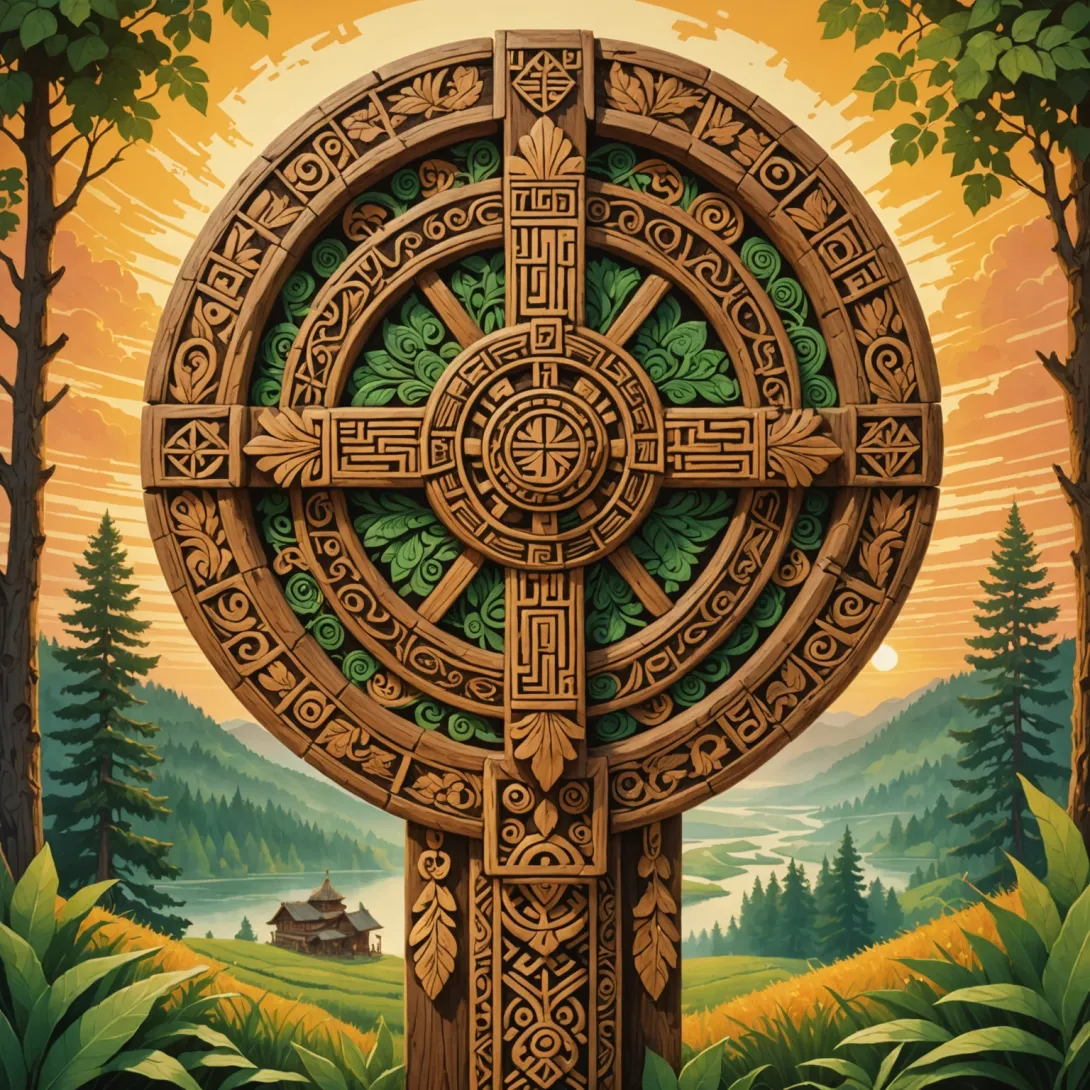
Understanding the Swastika: History, Meaning, and the Slavic Swastika
What is the Swastika Symbol?
The swastika symbol is an ancient geometric figure consisting of a cross with arms bent at right angles, typically oriented clockwise or counterclockwise. This shape has been used for thousands of years across various cultures worldwide, representing concepts like good fortune, the sun, life cycles, and spirituality.
Far from being a modern invention, the swastika has appeared in archaeological findings from ancient civilizations including those in Asia, Europe, and the Americas. Its form and orientation vary, but the fundamental shape remains recognizable as a powerful emblem intertwined with human history.
What is the Swastika History and Its Origins?
The swastika history spans over 5,000 years, making it one of the oldest known symbols. Archaeologists have discovered swastika motifs in Neolithic pottery, ancient temples, and artifacts from the Bronze Age. It was extensively used in Hinduism, Buddhism, and Jainism as a sacred symbol representing auspiciousness and cosmic order.
In Europe, the swastika emerged independently and was also widely used by ancient cultures, including the Slavs. The symbol’s meanings evolved through time but consistently conveyed positive connotations long before the 20th century.
- In ancient India, it symbolized the sun and prosperity.
- In Native American cultures, it was connected to the wind or whirlwind.
- In ancient Greece and Rome, it appeared as a decorative motif.
What Does the Swastika Meaning Encompass?
The swastika meaning varies depending on cultural context but generally revolves around themes of life, well-being, and the universe’s cyclical nature. In many traditions, it is viewed as a symbol of luck, protection, and spiritual power.
For example, in Hinduism, the swastika stands for the god Vishnu and the sun, symbolizing the eternal nature of the soul and the universe. In Slavic traditions, it is often associated with solar motifs and the eternal cycle of life and death.
Unfortunately, the symbol’s meaning was dramatically altered in the 20th century due to its appropriation by the Nazi regime, which distorted its cultural significance and transformed it into a symbol of hatred. Understanding the original meanings is crucial to appreciating the swastika symbol’s rich heritage.
What is the Slavic Swastika and Its Significance?
The Slavic swastika is a variation of the ancient swastika symbol used by the Slavic peoples before Christianization. It was an important element in Slavic pagan art and spiritual life, often carved into wood, depicted on clothing, or used in rituals.
This symbol was closely related to the sun god and represented protection, fertility, and the eternal cycle of nature. The Slavic swastika differs slightly in style but retains the fundamental geometric form, often featuring stylized arms with additional embellishments.
- It was a protective talisman against evil spirits.
- Used in agricultural rites to ensure good harvests.
- Emblematic of cosmic order and balance in nature.
Today, the Slavic swastika is studied within the context of Slavic heritage and folklore, helping revive interest in pre-Christian traditions and symbols.
Why Has the Ancient Swastika Been Misunderstood?
The ancient swastika became widely misunderstood primarily due to its adoption by the Nazi Party in the 1930s. This political appropriation led to a global stigma, overshadowing millennia of peaceful and spiritual uses.
Before this period, the swastika was a ubiquitous symbol with positive associations across cultures. Its misuse has resulted in legal restrictions and social discomfort in various countries, complicating efforts to educate about its true origins.
However, scholars and cultural historians continue to emphasize the distinction between the symbol's original meanings and its 20th-century misappropriation, advocating for a nuanced understanding.
How Can One Appreciate the Swastika Symbol Today?
To appreciate the swastika symbol today, it is important to:
- Learn about its diverse historical contexts and meanings.
- Recognize the differences between various cultural variants, such as the Slavic swastika.
- Respect the symbol’s sacred significance in many religions and traditions.
- Understand and acknowledge the impact of its misuse in the modern era.
By contextualizing the swastika within its ancient and cultural frameworks, people can reclaim its heritage as a symbol of life, continuity, and spirituality rather than hate.
Conclusion
The swastika history is vast and multifaceted, encompassing ancient civilizations, spiritual beliefs, and cultural expressions. The Slavic swastika is a notable regional variant that highlights the symbol’s significance in European pagan traditions. Understanding the swastika meaning in its original contexts allows us to appreciate this ancient symbol beyond its modern associations.
Encouraging educational efforts and respectful dialogue is key to restoring the swastika’s place as a profound emblem of humanity’s shared cultural heritage.